
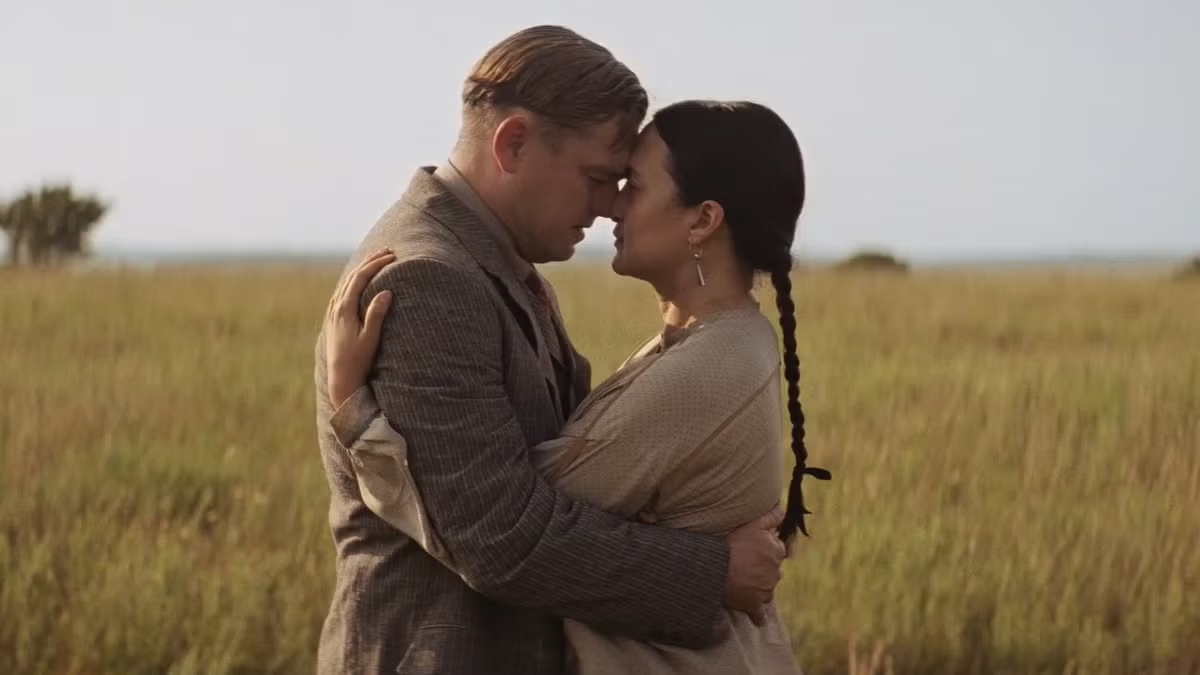
Killers of the Flower Moon: The Osage Nation Murders

mashupch.com – Martin Scorsese is widely regarded as one of the greatest filmmakers in the history of cinema, with a career spanning over five decades and an iconic collection of films. His works often explore complex themes such as guilt, redemption, morality, and the darker sides of human nature. With Killers of the Flower Moon, Scorsese ventures into new territory by bringing to light a dark chapter of American history—the Osage Nation murders in 1920s Oklahoma. Based on David Grann’s non-fiction book Killers of the Flower Moon: The Osage Murders and the Birth of the FBI, the film chronicles the systemic exploitation and brutal killings of the Osage people during a period of intense racial and economic turmoil.

This article will explore the historical background of the Osage Nation murders, the key elements of Scorsese’s adaptation, and how the film shines a light on the forgotten injustices of early 20th-century America. It will also examine the performances by the cast, including Leonardo DiCaprio and Robert De Niro, and how the film handles themes of greed, betrayal, and systemic racism.

The Osage Murders: A Tragic and Overlooked Chapter in American History

In the early 20th century, the Osage Nation, a Native American tribe that had been relocated to Oklahoma, became one of the wealthiest communities in the United States. The Osage were sitting on valuable land that held immense oil reserves, and as the oil boom took off, the tribe reaped the rewards. In the 1920s, Osage individuals were among the richest people in the world, and their newfound wealth made them targets for exploitation and violence.

However, their prosperity came at a deadly cost. As their fortunes grew, so did the exploitation and deception that accompanied it. White settlers and businessmen, eager to gain access to the Osage wealth, began a systematic campaign of murder, deceit, and fraud to steal land and oil rights from the Osage people. This culminated in a series of horrific murders, known as the Osage Reign of Terror, where dozens of Osage were killed or poisoned under mysterious circumstances. Many of these deaths were attributed to the greed of white settlers, who used marriage, manipulation, and even outright murder to gain control of the Osage’s oil wealth.

The story is an unsettling account of systemic racism, as the Osage were not only victimized by individuals but also by a society that ignored their rights and allowed the exploitation to flourish. It was not until the newly-formed Federal Bureau of Investigation (FBI) took interest in the case, with the assistance of an undercover investigation led by agent Tom White, that justice began to be sought. However, by that time, many lives had already been lost.

Killers of the Flower Moon explores this period of American history, presenting the murders of the Osage people and their fight for justice in a devastating and thorough narrative. Scorsese’s film delves into the motivations behind the murders, the consequences of greed, and the institutional racism that enabled such horrors to persist.

The Adaptation: Scorsese’s Approach to Telling the Story

Martin Scorsese’s adaptation of Killers of the Flower Moon is a powerful exploration of a traumatic and largely forgotten episode in American history. The film stays true to David Grann’s book, meticulously detailing the systematic nature of the crimes and the characters involved. What makes the film stand out, however, is Scorsese’s ability to balance the historical accuracy with his signature storytelling style, bringing a human face to a story that is too often relegated to the periphery of mainstream history.

Scorsese’s approach to the material is marked by his characteristic attention to detail and his deep exploration of moral complexity. Much like his previous films, the director is drawn to stories that examine human behavior—particularly the darker, more destructive aspects. Killers of the Flower Moon presents a chilling portrait of the depths to which individuals will go in the pursuit of wealth and power, and it doesn’t shy away from the ugly truths about racism and injustice that have plagued American society for centuries.

At the same time, Scorsese doesn’t present the film as a simple tale of good versus evil. The story is nuanced, examining the motivations behind each character’s actions while never losing sight of the real-world consequences. Scorsese shows how those in power—whether through societal influence or direct violence—systematically dismantled the lives of the Osage people in an effort to secure their riches.

Leonardo DiCaprio and Robert De Niro: A Powerful Duo

The cast of Killers of the Flower Moon is led by Leonardo DiCaprio and Robert De Niro, both of whom are veteran actors with a long history of working with Scorsese. DiCaprio plays Ernest Burkhardt, a key figure in the Osage murders who is both a participant in and a witness to the growing conspiracy. De Niro portrays William Hale, a wealthy and manipulative businessman who orchestrates many of the murders and abuses his power to control the Osage wealth.

DiCaprio’s portrayal of Ernest is a study in internal conflict and moral decay. At the film’s start, Ernest is portrayed as a simple man who marries an Osage woman, Mollie Kyle (played by Lily Gladstone), in part because of her wealth. However, as the murders unfold, DiCaprio reveals the gradual erosion of Ernest’s conscience. He is drawn into the conspiracy, but it is clear that he is conflicted about his involvement. DiCaprio captures Ernest’s complicity, fear, and ultimate realization of the enormity of the crimes he’s a part of.

De Niro’s performance as William Hale is equally captivating. Hale is a deeply charismatic and manipulative figure, able to hide his ruthlessness behind a façade of charm and affability. De Niro, a master of portraying complex characters, delivers a chilling portrayal of a man who is willing to do anything to maintain his power and control, no matter the cost. Hale’s villainy is insidious, rooted in his desire for wealth and influence, and De Niro brings a cold, calculating menace to the role.

Together, DiCaprio and De Niro create a dynamic that drives the emotional core of the film. Their performances contrast the innocence and vulnerability of the Osage people, particularly Mollie Kyle, with the cruelty of the men who would stop at nothing to destroy them. The interactions between Ernest and Hale demonstrate the moral decay that occurs when greed and power go unchecked.

A Dark Examination of Greed and Racism

Killers of the Flower Moon is not just a recounting of historical events—it is a poignant exploration of the themes of greed, corruption, and systemic racism. Throughout the film, Scorsese focuses on the moral rot that underpins the actions of the perpetrators of the Osage murders. The film examines how individuals will justify their actions to themselves, rationalizing their greed and violent actions as acceptable within a corrupt system.

At its heart, the story is a tragic commentary on the dispossession of Native Americans. The Osage murders reflect a larger pattern of systemic violence and theft that targeted Native communities throughout the history of the United States. Scorsese does not shy away from exposing the racial hierarchies that allowed such crimes to flourish, nor does he downplay the brutality of the murders themselves. The film makes it clear that the Osage were not simply victims of individual killers but were systematically targeted by a culture of corruption that existed at every level of society.

Racism plays a central role in the film, particularly in how the Osage people are treated by the authorities and the broader American society. Despite the fact that the Osage were among the wealthiest people in the country, they were treated as inferior by the white settlers and businessmen who sought to exploit them. This cultural and racial divide is a constant backdrop throughout the film, and it highlights the ways in which the Osage were dehumanized, not just by individual killers but by a society that allowed the murders to take place.

In addition to the murders, the film also highlights the complicity of local law enforcement and the broader judicial system. The Osage people were often ignored or misrepresented by the authorities, and it was only with the intervention of the FBI that any attempt at justice was made. Scorsese’s film highlights the fundamental flaws in the justice system of the time and underscores the inherent challenges faced by marginalized communities in seeking redress for the crimes committed against them.

Conclusion: A Masterpiece of Historical Filmmaking

Killers of the Flower Moon is a haunting, powerful film that shines a light on a dark chapter of American history that has long been overlooked. Martin Scorsese’s direction, combined with the gripping performances of Leonardo DiCaprio and Robert De Niro, creates a poignant and unsettling narrative that resonates with audiences today. The film is an unflinching examination of greed, racism, and the systemic exploitation that defined the early 20th century.

Through the lens of this tragic true story, Killers of the Flower Moon offers a sobering reminder of the dangers of unchecked power and the toll that greed can take on both individuals and entire communities. The Osage Nation murders may have been buried in the annals of history, but Scorsese’s film ensures that their story is not forgotten. As a work of historical filmmaking, it is both a testament to the resilience of the Osage people and a reflection on the deep injustices that continue to shape the world today.
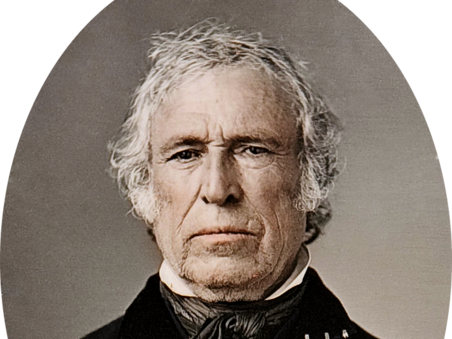
Zachary Taylor’s Approach to the Nation’s Expanding Borders

mashupch.com – As the 12th President of the United States, Zachary Taylor’s time in office was marked by the rapid expansion of the nation’s borders, a period of significant change and tension. From the annexation of Texas to the resolution of territorial disputes with Mexico, the mid-19th century was a time when the country was growing in both size and influence. Taylor’s presidency, though brief, had an undeniable impact on how America approached its territorial expansion.

Taylor’s approach to the nation’s expanding borders was shaped by his background as a military leader, his personal convictions, and the political landscape of the time. His position on key issues such as slavery, war, and the rights of new territories played a significant role in shaping the trajectory of the United States during his presidency.

This article explores Zachary Taylor’s stance on territorial expansion, his role in the Mexican-American War, and his approach to the admission of new states, all of which were central to his leadership during this transformative period in American history.

The Context of Expansion

The Nation’s Growing Territorial Ambitions

By the time Zachary Taylor was elected president in 1848, the United States had already experienced a period of substantial territorial growth. The Louisiana Purchase in 1803 had more than doubled the size of the country, and the annexation of Texas in 1845 added vast new lands to the nation’s southwestern border. The question of whether the United States should continue to expand, and how that expansion should be handled, was a central issue of the day.

The idea of “Manifest Destiny” — the belief that it was America’s divine mission to expand across the continent — was at its peak in the 1840s. The idea was embraced by many political leaders, including President James K. Polk, whose administration had overseen the annexation of Texas and the war with Mexico. As a result of this expansionist zeal, the United States found itself grappling with the question of how to incorporate these new territories into the Union while maintaining a balance of power, particularly regarding the issue of slavery.

The Mexican-American War

A key event in the expansion of the United States was the Mexican-American War (1846-1848), a conflict that arose largely from the dispute over Texas and other territory in the Southwest. The war began under the leadership of President Polk, but it was during this conflict that Zachary Taylor’s military reputation was solidified.

As a general, Taylor commanded American forces in the field and achieved significant victories at the Battles of Palo Alto, Resaca de la Palma, and Buena Vista. These triumphs earned him national fame, and he became a hero to many Americans who supported the country’s expansionist goals. Taylor’s success in battle led to his rise in the political arena, and he was elected president in 1848 largely due to his military record.

However, as president, Taylor faced the difficult task of managing the consequences of the war, particularly in terms of how to incorporate the newly acquired territories into the Union.

Taylor’s Presidency and Territorial Expansion

The Treaty of Guadalupe Hidalgo

One of the most significant moments in Zachary Taylor’s presidency came shortly after he took office in 1849, when the Treaty of Guadalupe Hidalgo was signed on February 2, 1848, effectively ending the Mexican-American War. The treaty had far-reaching consequences, as it resulted in Mexico ceding a vast expanse of land to the United States. This land, which came to be known as the Mexican Cession, included modern-day California, Nevada, Utah, Arizona, and parts of Colorado, Wyoming, New Mexico, and Texas.

Though the treaty was signed before Taylor became president, the final terms of the settlement fell under his purview, and his approach to the acquisition of this land would have a lasting effect on the nation’s growth. Taylor supported the treaty’s terms and worked to ensure that the new territories were properly administered, but the issue of slavery and its expansion into these lands soon became one of the central points of political contention.

The Question of Slavery and the Wilmot Proviso

As the United States moved to incorporate the Mexican Cession into the Union, the question of whether slavery would be allowed in these new territories dominated political discourse. In 1846, shortly after the start of the Mexican-American War, Pennsylvania Congressman David Wilmot proposed the Wilmot Proviso, a measure that sought to prohibit slavery in any territory acquired from Mexico.

Though the proviso was never passed, it sparked a heated debate that continued throughout the 1840s and 1850s. Northern lawmakers supported the Wilmot Proviso, arguing that slavery should be kept out of the new territories, while many Southern politicians feared that restricting slavery would upset the delicate balance of power between slave and free states. The debate over slavery’s expansion into the new territories would be one of the defining issues of Taylor’s presidency.

Taylor’s Stance on Slavery in the Territories

As president, Taylor adopted a somewhat unorthodox stance on the issue of slavery. While he was a slave owner himself and came from a Southern state (Louisiana), Taylor was deeply committed to preserving the Union and avoiding the sectional conflicts that were threatening to tear the nation apart. As a result, he took a moderate approach to the issue of slavery in the new territories.

Taylor’s main position was that the people of the territories — not Congress — should decide whether to permit slavery. He believed that the issue of slavery should be left to the settlers in the newly acquired territories, rather than being dictated by the federal government. Taylor’s position aligned with the principle of popular sovereignty, which would later be advocated by politicians like Senator Stephen A. Douglas.

However, this position was not without its critics. Northern abolitionists and anti-slavery advocates viewed Taylor’s stance as insufficient, while Southerners feared that the territories would eventually become free states, tipping the balance of power against slavery.

The California Gold Rush and the Admission of New States

One of the most immediate consequences of the Mexican Cession was the influx of settlers into California, following the discovery of gold at Sutter’s Mill in 1848. The California Gold Rush attracted thousands of settlers from across the United States, as well as from abroad, all seeking fortune in the goldfields. As the population of California swelled, the question arose of whether the territory should be admitted as a state.

By 1849, California’s population had grown sufficiently for its leaders to propose statehood. However, the admission of California as a free state raised significant concerns for Southern politicians, who feared that the inclusion of another free state would tip the balance of power in favor of the North. Taylor, however, was inclined to support California’s admission as a free state, as he believed that doing so would help prevent further conflict over the expansion of slavery.

Taylor’s support for California statehood was one of the key issues that marked his presidency. His willingness to admit California as a free state, without waiting for a formal resolution on the slavery issue, put him at odds with many Southern leaders who wanted to preserve slavery in the new territories.

The Compromise of 1850 and Taylor’s Death

The political tensions over slavery in the territories came to a head during the summer of 1850, when Congress attempted to resolve the issue through the Compromise of 1850. The compromise, which was crafted by Senators Henry Clay and Stephen A. Douglas, aimed to balance the interests of both free and slave states. The provisions of the compromise included the admission of California as a free state, the establishment of territorial governments in the Southwest, and a stronger Fugitive Slave Act to ensure the return of runaway slaves.

However, before Taylor could fully engage in the debates surrounding the compromise, he fell ill and died on July 9, 1850, after just 16 months in office. Taylor’s death led to the presidency of his vice president, Millard Fillmore, who played a key role in securing the passage of the Compromise of 1850.

Had Taylor lived longer, it is possible that he would have attempted to resolve the crisis over slavery and territorial expansion himself, but his unexpected death left the nation to grapple with these issues without his leadership.

Conclusion

Zachary Taylor’s approach to the nation’s expanding borders was shaped by his military background, his desire to preserve the Union, and his commitment to finding a practical solution to the issue of slavery in the new territories. His presidency was marked by the resolution of the Mexican-American War and the question of whether slavery should be allowed to expand into the territories gained from Mexico.

Although his presidency was short-lived, Taylor’s decisions regarding the Mexican Cession, California statehood, and slavery had a lasting impact on the nation. His moderate stance on slavery, combined with his strong belief in the preservation of the Union, would help shape the trajectory of American politics during a period of intense division and growing sectionalism. Despite his death in 1850, Zachary Taylor’s legacy remains one of leadership during a time of great national change and challenge.