

Grant’s Presidency: Scandals, Achievements & American Dream

mashupch.com – Ulysses S. Grant, the 18th President of the United States, is often remembered for his remarkable military leadership during the Civil War and his later role in the preservation of the Union. Yet, his presidency, which spanned from 1869 to 1877, remains a subject of considerable debate and scrutiny. Grant’s two terms in office were marked by both significant achievements and frustrating scandals, creating a complex legacy that reflects both the promise and pitfalls of postwar Reconstruction and American political life during the late 19th century.

In this article, we will explore the multifaceted nature of Grant’s presidency, discussing both the scandals that tarnished his reputation and the achievements that cemented his place in history. We will also examine how his presidency represented a larger struggle for the American Dream, particularly in the context of Reconstruction, civil rights, and the nation’s rapid industrialization. Grant’s administration is a reflection of a turbulent era in American history, and understanding his time in office is essential for comprehending the complexities of post-Civil War America.

The Election of Ulysses S. Grant: A Hero of the Union

Ulysses S. Grant’s election to the presidency in 1868 was largely a consequence of his stature as a hero of the Civil War. After leading the Union Army to victory and accepting the surrender of General Robert E. Lee at Appomattox Court House in 1865, Grant became a national figure and was widely regarded as one of the saviors of the Union. His military leadership gave him an overwhelming popularity, and he was seen as a symbol of national reconciliation and unity.

However, despite his popularity, Grant was initially reluctant to enter politics. He had no prior political experience, and his initial desire was to return to a quiet life after the war. Yet, political leaders of the Republican Party, eager to build on the momentum of Union victory, urged Grant to run for president. In the end, his candidacy was seen as a natural extension of his war hero status. Grant’s victory in the 1868 election, which was largely driven by support from African American voters and the Republican Party’s commitment to Reconstruction, marked the beginning of a presidency that would be defined by his efforts to rebuild the nation in the wake of the Civil War.

Grant’s Commitment to Reconstruction

One of the central goals of Grant’s presidency was the continuation and protection of Reconstruction, the federal effort to rebuild the South after its defeat in the Civil War. For Grant, Reconstruction was not merely a political policy—it was a moral imperative. As a Union general who had witnessed the horrors of war firsthand, Grant was deeply committed to ensuring that the rights of freed African Americans were protected and that the Southern states were reintegrated into the Union with an eye toward racial equality.

In his first term, Grant supported the Reconstruction Acts, which aimed to rebuild Southern state governments and extend civil rights to formerly enslaved people. He was a strong advocate for the 15th Amendment (ratified in 1870), which granted African American men the right to vote. Grant also worked to enforce the Civil Rights Act of 1875, which sought to prevent racial discrimination in public places. His presidency also saw the creation of the Department of Justice and the Ku Klux Klan Act of 1871, which were designed to combat violence and intimidation against African Americans in the South.

While Grant’s commitment to Reconstruction was admirable, his administration faced significant challenges in enforcing these policies. Opposition from Southern Democrats and the Ku Klux Klan undermined many of his efforts, and Congressional Republicans were often divided over how to approach the issue of civil rights. Grant’s personal dedication to these causes, however, reflected his belief in the fundamental equality of all citizens and his determination to ensure that the Union’s victory in the Civil War translated into lasting change.

The Scandals of Grant’s Presidency

While Grant’s presidency was marked by a number of important achievements, it was also beset by a series of scandals that tarnished his reputation and complicated his legacy. These scandals involved corruption, cronyism, and political mismanagement, and they highlighted the difficulties Grant faced in managing an increasingly complicated political landscape.

The Credit Mobilier Scandal (1872)

One of the most infamous scandals during Grant’s presidency was the Credit Mobilier scandal, which revolved around the construction of the Union Pacific Railroad. In the early 1870s, members of Congress and high-ranking officials in the railroad industry were implicated in a scheme to defraud the government by overcharging for railroad construction projects. Credit Mobilier, a company formed to oversee the railroad’s construction, secretly distributed stock to members of Congress and others in exchange for their political support. When the scandal broke, it became clear that several prominent politicians had been involved in the scheme, though Grant himself was never directly implicated.

Nevertheless, the scandal badly damaged Grant’s reputation. Although he did not personally benefit from the scheme, the public perception that his administration was linked to corruption and dishonesty raised questions about his ability to govern effectively. The Credit Mobilier scandal set the tone for a series of other corruption-related scandals that would plague his presidency.

The Whiskey Ring Scandal (1875)

Another major scandal that occurred during Grant’s second term was the Whiskey Ring, which involved a group of politicians, government officials, and distillers who were conspiring to defraud the government of tax revenues on alcohol. The ring’s members had been secretly diverting tax funds to their own pockets, resulting in millions of dollars in lost revenue for the federal government.

The Whiskey Ring scandal involved several high-ranking officials in Grant’s administration, including his personal secretary, Orville Babcock, who was accused of helping to cover up the scheme. Grant’s initial defense of Babcock, despite evidence of his involvement, caused further damage to the administration’s credibility. Although Babcock was eventually acquitted, the scandal underscored the widespread corruption that was taking place under Grant’s watch and further eroded public confidence in his leadership.

Other Corruption and Cronyism

Beyond the major scandals, Grant’s presidency was also marked by a pattern of cronyism and patronage. His close relationship with certain political figures and his tendency to appoint friends and associates to high-ranking positions led to the perception that the government was being run for the benefit of a select few rather than for the nation as a whole. Grant’s reliance on political patronage, where appointments were made based on loyalty rather than merit, led to inefficiency and dysfunction in various parts of the government.

Despite these issues, Grant remained personally honest and hardworking, often holding himself to a high standard of integrity. Yet, his inability to effectively manage his administration and to prevent corruption led many to question his leadership ability.

Achievements and the Legacy of Grant’s Presidency

While Grant’s presidency is often overshadowed by scandal, it was also marked by important achievements that have contributed to his lasting legacy. Grant’s efforts in Reconstruction, civil rights, and the establishment of a stronger federal government were crucial in shaping the postwar United States.

Enforcement of Civil Rights

Grant’s administration was dedicated to the protection of African American rights, particularly in the South. He fought to uphold the provisions of the 14th and 15th Amendments, which guaranteed citizenship and voting rights to African Americans. His use of federal troops to suppress the Ku Klux Klan and his enforcement of civil rights laws marked significant efforts to ensure racial equality during the Reconstruction period.

Economic Growth and the Enforcement of Law and Order

Grant also presided over a period of significant economic growth, as the United States underwent industrialization and westward expansion. He oversaw the establishment of the National Park Service, the completion of the Transcontinental Railroad, and significant improvements to the nation’s infrastructure. Grant’s administration also worked to address the Panic of 1873, an economic depression that resulted from reckless banking practices and overspeculation. Though the recovery was slow, Grant’s efforts to stabilize the economy laid the groundwork for future growth.

Additionally, Grant’s presidency was marked by efforts to reduce corruption within the federal government, as well as to strengthen the civil service system and enforce laws against bribery and fraud.

Grant’s Legacy: A Complex Hero

Ulysses S. Grant’s presidency remains a study in contrasts. While his administration was marred by scandals, it was also a time of significant achievements in the realm of civil rights, economic development, and governmental reform. Grant’s unwavering commitment to preserving the Union and ensuring the rights of freed slaves set him apart as a president who sought to fulfill the promises of the Civil War.

Despite the controversies, Grant’s presidency contributed to the advancement of the American Dream for many citizens, especially African Americans in the postwar South. However, his inability to effectively manage the corruption within his administration also highlighted the challenges of governing in a rapidly changing nation.

Ultimately, Grant’s legacy is one of complexity—marked by heroic achievements on behalf of the nation but also marred by administrative mismanagement. History may be kinder to Grant than his contemporaries were, as his dedication to Reconstruction and his efforts to secure civil rights for African Americans become more appreciated over time. Yet, his presidency remains a vivid example of how personal integrity does not always translate into effective governance, and how the American Dream can be both realized and compromised in the highest echelons of power.
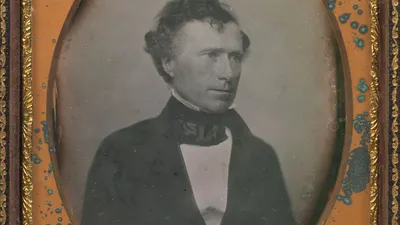
Franklin Pierce: The Presidency Marked by Disunity

mashupch.com – Franklin Pierce’s presidency, serving as the 14th President of the United States from 1853 to 1857, is often remembered as a period marked by disunity and political fragmentation. Emerging in an era when the nation was rapidly transforming—socially, economically, and territorially—Pierce’s time in office was deeply influenced by the sectional tensions surrounding slavery, expansionism, and the waning influence of traditional political institutions. This article delves into the factors that shaped his rise to power, the major challenges of his administration, and the enduring impact of his policies on a divided America.

Early Life and Political Ascent

Understanding Franklin Pierce’s presidency begins with a look at his early life and the factors that shaped his political philosophy.

Early Life and Education

Born on November 23, 1804, in Hillsborough, New Hampshire, Franklin Pierce grew up in a modest, patriotic family steeped in New England values. His upbringing in a region known for its commitment to republican ideals and civic responsibility significantly influenced his worldview. Despite facing personal and financial hardships during his youth, Pierce pursued an education that laid the groundwork for a career in public service. Early exposure to the political debates of his time and the guidance of local leaders helped instill in him a sense of duty that would later define his approach to governance.

Political Rise

Pierce’s ascent in the political arena was both gradual and marked by his ability to appeal to a wide range of Democratic Party constituents. He began his public service career in the New Hampshire state legislature, where he gained invaluable experience in lawmaking and public administration. His effectiveness as a legislator and his moderate political stance earned him a seat in the United States House of Representatives and later in the Senate. His military service during the Mexican-American War further bolstered his public image, portraying him as a patriot willing to serve his country in times of conflict. These experiences ultimately paved the way for his nomination as the Democratic candidate for the presidency in 1852, culminating in a hard-fought election during an era rife with sectional discord.

The Presidency Marked by Disunity

Pierce assumed office at a time when America was grappling with profound internal divisions. His presidency is particularly noted for policies and decisions that inadvertently deepened the nation’s fractures.

The Context of an Evolving Nation

The mid-19th century was a period of significant change in America. Westward expansion, driven by the belief in Manifest Destiny, introduced new territories into the national debate over slavery. The country was increasingly divided between industrial, free-soil interests in the North and agrarian, slave-reliant economies in the South. This transformation redefined political allegiances and regional identities. Pierce’s administration was caught in this conflict, facing the challenge of reconciling economic progress with the moral and legal dilemmas posed by slavery.

The Kansas-Nebraska Act and Sectional Conflict

A defining moment of Pierce’s presidency was his support for the Kansas-Nebraska Act. This controversial legislation allowed the settlers in the Kansas and Nebraska territories to decide whether to permit slavery, effectively repealing the Missouri Compromise that had maintained a precarious balance between free and slave states. The act ignited intense debates and violent conflicts, most notably in the region known as “Bleeding Kansas,” where pro-slavery and anti-slavery factions clashed. Although Pierce viewed the act as a necessary step to facilitate national expansion, it only served to deepen sectional divisions and alienate many Northern Democrats and abolitionists, further fragmenting the nation.

Leadership Challenges and Political Division

Pierce’s leadership style was marked by a tendency to favor compromise and a reliance on the traditional patronage system. However, these approaches proved inadequate in addressing the rapidly escalating political divisions of his time. His inability to effectively mediate between the conflicting interests of Northern moderates and Southern extremists weakened his political position and stoked further disunity within the Democratic Party. The internal strife and infighting during his administration set the stage for a political realignment that would eventually contribute to the emergence of the Republican Party and the looming crisis of the Civil War.

Domestic Policy and Its Impact on National Unity

Beyond the contentious issue of slavery, Franklin Pierce’s domestic policies reveal the complexities of governing a nation divided along economic, regional, and ideological lines.

Judicial Appointments and Political Patronage

Pierce’s use of political patronage in making judicial appointments underscored his commitment to maintaining party loyalty, sometimes at the expense of broader national interests. His selections for key governmental and judicial positions were often based on regional allegiances, which reinforced existing divides rather than bridging them. Critics argued that this reliance on patronage not only compromised the integrity of the judicial system but also fostered a culture of corruption and inefficiency within his administration.

Economic Policies and Their Social Impact

The economic policies of the Pierce administration attempted to balance the interests of both agrarian and industrial stakeholders. As the nation expanded westward, debates over tariffs, infrastructure investments, and federal economic intervention intensified. Pierce’s efforts to modernize certain aspects of the economy were met with resistance from traditionalist factions, while his compromises left neither side fully satisfied. This delicate balancing act, intended to foster economic growth, inadvertently highlighted the disparate needs and priorities of the North and South, contributing to the overall climate of disunity.

Foreign Policy in a Time of Internal Strife

While domestic issues dominated much of his presidency, Franklin Pierce’s foreign policy initiatives also played a role in exacerbating national divisions.

Diplomatic Endeavors and International Relations

On the international stage, Pierce sought to expand American influence and secure national interests abroad. A notable example was the Ostend Manifesto, a document drafted by American diplomats that advocated for the acquisition of Cuba from Spain by any means necessary. This initiative was widely perceived as an attempt to extend slavery into new territories, further intensifying domestic debates. Although his foreign policy aimed to bolster American prestige and economic interests, it was often viewed with suspicion by critics who believed that it served to entrench pro-slavery sentiments at home.

The Role of Foreign Policy in Domestic Disunity

The interplay between foreign policy and domestic politics during Pierce’s tenure illustrates how international ambitions can sometimes worsen internal conflicts. Policies like the Ostend Manifesto were seen not only as diplomatic maneuvers but also as efforts to protect and expand the institution of slavery. This perception fueled opposition among Northern abolitionists and moderate Democrats, further polarizing an already divided nation. As a result, Pierce’s international initiatives contributed to the growing sense of disunity and mistrust within American society.

The Legacy of Franklin Pierce’s Administration

Franklin Pierce’s presidency is a subject of extensive historical debate, with many viewing his administration as a turning point that deepened national divisions and hastened the path toward civil conflict.

Immediate Aftermath and Political Realignment

In the wake of Pierce’s presidency, the Democratic Party experienced significant internal strife. The inability to reconcile the differing interests of its Northern and Southern factions led to a schism that eventually paved the way for the rise of the Republican Party. This political realignment was not solely the result of Pierce’s policies but rather the culmination of decades of growing sectional tension. His support for the Kansas-Nebraska Act, in particular, is often cited as a catalyst for the ideological realignment that would shape the political landscape in the years leading up to the Civil War.

Historical Evaluation and Lessons Learned

Historians continue to debate Franklin Pierce’s legacy, weighing his personal qualities—such as his sincerity and dedication—against the backdrop of significant policy failures. While some argue that he was a leader caught in the tumultuous currents of his time, others contend that his policy choices and leadership style exacerbated the nation’s divisions. The lessons drawn from his presidency highlight the importance of addressing underlying social and regional conflicts before they become irreparable, offering a cautionary tale for leaders facing similar challenges today.

Reflections on National Division and Leadership Failures

The era of Franklin Pierce’s presidency remains a poignant reminder of the perils of disunity in governance. His administration’s failure to effectively bridge the gap between competing regional interests left a legacy of fragmentation that resonated well beyond his time in office. Modern reflections on his tenure emphasize the need for inclusive and forward-thinking leadership—qualities that Pierce, despite his many virtues, struggled to fully embody during one of America’s most critical periods.

Conclusion

Franklin Pierce’s presidency is a complex chapter in American history, defined by a series of decisions and policies that deepened national divisions and set the stage for future conflicts. His support for controversial measures such as the Kansas-Nebraska Act and his reliance on traditional political patronage contributed to an environment of disunity and mistrust. While his personal dedication to public service and his earnest attempt to govern a rapidly changing nation are acknowledged, the long-term impact of his administration underscores the challenges of leading a divided country.

The legacy of Franklin Pierce serves as both a historical lesson and a call to action for contemporary leaders: in times of crisis, addressing underlying societal fractures with comprehensive and inclusive policies is essential to maintaining national unity. As America continues to navigate its own internal divisions, the story of Pierce’s presidency remains a reminder of the critical importance of visionary leadership in overcoming challenges and forging a cohesive national identity.