

Grant’s Presidency: Scandals, Achievements & American Dream

mashupch.com – Ulysses S. Grant, the 18th President of the United States, is often remembered for his remarkable military leadership during the Civil War and his later role in the preservation of the Union. Yet, his presidency, which spanned from 1869 to 1877, remains a subject of considerable debate and scrutiny. Grant’s two terms in office were marked by both significant achievements and frustrating scandals, creating a complex legacy that reflects both the promise and pitfalls of postwar Reconstruction and American political life during the late 19th century.

In this article, we will explore the multifaceted nature of Grant’s presidency, discussing both the scandals that tarnished his reputation and the achievements that cemented his place in history. We will also examine how his presidency represented a larger struggle for the American Dream, particularly in the context of Reconstruction, civil rights, and the nation’s rapid industrialization. Grant’s administration is a reflection of a turbulent era in American history, and understanding his time in office is essential for comprehending the complexities of post-Civil War America.

The Election of Ulysses S. Grant: A Hero of the Union

Ulysses S. Grant’s election to the presidency in 1868 was largely a consequence of his stature as a hero of the Civil War. After leading the Union Army to victory and accepting the surrender of General Robert E. Lee at Appomattox Court House in 1865, Grant became a national figure and was widely regarded as one of the saviors of the Union. His military leadership gave him an overwhelming popularity, and he was seen as a symbol of national reconciliation and unity.

However, despite his popularity, Grant was initially reluctant to enter politics. He had no prior political experience, and his initial desire was to return to a quiet life after the war. Yet, political leaders of the Republican Party, eager to build on the momentum of Union victory, urged Grant to run for president. In the end, his candidacy was seen as a natural extension of his war hero status. Grant’s victory in the 1868 election, which was largely driven by support from African American voters and the Republican Party’s commitment to Reconstruction, marked the beginning of a presidency that would be defined by his efforts to rebuild the nation in the wake of the Civil War.

Grant’s Commitment to Reconstruction

One of the central goals of Grant’s presidency was the continuation and protection of Reconstruction, the federal effort to rebuild the South after its defeat in the Civil War. For Grant, Reconstruction was not merely a political policy—it was a moral imperative. As a Union general who had witnessed the horrors of war firsthand, Grant was deeply committed to ensuring that the rights of freed African Americans were protected and that the Southern states were reintegrated into the Union with an eye toward racial equality.

In his first term, Grant supported the Reconstruction Acts, which aimed to rebuild Southern state governments and extend civil rights to formerly enslaved people. He was a strong advocate for the 15th Amendment (ratified in 1870), which granted African American men the right to vote. Grant also worked to enforce the Civil Rights Act of 1875, which sought to prevent racial discrimination in public places. His presidency also saw the creation of the Department of Justice and the Ku Klux Klan Act of 1871, which were designed to combat violence and intimidation against African Americans in the South.

While Grant’s commitment to Reconstruction was admirable, his administration faced significant challenges in enforcing these policies. Opposition from Southern Democrats and the Ku Klux Klan undermined many of his efforts, and Congressional Republicans were often divided over how to approach the issue of civil rights. Grant’s personal dedication to these causes, however, reflected his belief in the fundamental equality of all citizens and his determination to ensure that the Union’s victory in the Civil War translated into lasting change.

The Scandals of Grant’s Presidency

While Grant’s presidency was marked by a number of important achievements, it was also beset by a series of scandals that tarnished his reputation and complicated his legacy. These scandals involved corruption, cronyism, and political mismanagement, and they highlighted the difficulties Grant faced in managing an increasingly complicated political landscape.

The Credit Mobilier Scandal (1872)

One of the most infamous scandals during Grant’s presidency was the Credit Mobilier scandal, which revolved around the construction of the Union Pacific Railroad. In the early 1870s, members of Congress and high-ranking officials in the railroad industry were implicated in a scheme to defraud the government by overcharging for railroad construction projects. Credit Mobilier, a company formed to oversee the railroad’s construction, secretly distributed stock to members of Congress and others in exchange for their political support. When the scandal broke, it became clear that several prominent politicians had been involved in the scheme, though Grant himself was never directly implicated.

Nevertheless, the scandal badly damaged Grant’s reputation. Although he did not personally benefit from the scheme, the public perception that his administration was linked to corruption and dishonesty raised questions about his ability to govern effectively. The Credit Mobilier scandal set the tone for a series of other corruption-related scandals that would plague his presidency.

The Whiskey Ring Scandal (1875)

Another major scandal that occurred during Grant’s second term was the Whiskey Ring, which involved a group of politicians, government officials, and distillers who were conspiring to defraud the government of tax revenues on alcohol. The ring’s members had been secretly diverting tax funds to their own pockets, resulting in millions of dollars in lost revenue for the federal government.

The Whiskey Ring scandal involved several high-ranking officials in Grant’s administration, including his personal secretary, Orville Babcock, who was accused of helping to cover up the scheme. Grant’s initial defense of Babcock, despite evidence of his involvement, caused further damage to the administration’s credibility. Although Babcock was eventually acquitted, the scandal underscored the widespread corruption that was taking place under Grant’s watch and further eroded public confidence in his leadership.

Other Corruption and Cronyism

Beyond the major scandals, Grant’s presidency was also marked by a pattern of cronyism and patronage. His close relationship with certain political figures and his tendency to appoint friends and associates to high-ranking positions led to the perception that the government was being run for the benefit of a select few rather than for the nation as a whole. Grant’s reliance on political patronage, where appointments were made based on loyalty rather than merit, led to inefficiency and dysfunction in various parts of the government.

Despite these issues, Grant remained personally honest and hardworking, often holding himself to a high standard of integrity. Yet, his inability to effectively manage his administration and to prevent corruption led many to question his leadership ability.

Achievements and the Legacy of Grant’s Presidency

While Grant’s presidency is often overshadowed by scandal, it was also marked by important achievements that have contributed to his lasting legacy. Grant’s efforts in Reconstruction, civil rights, and the establishment of a stronger federal government were crucial in shaping the postwar United States.

Enforcement of Civil Rights

Grant’s administration was dedicated to the protection of African American rights, particularly in the South. He fought to uphold the provisions of the 14th and 15th Amendments, which guaranteed citizenship and voting rights to African Americans. His use of federal troops to suppress the Ku Klux Klan and his enforcement of civil rights laws marked significant efforts to ensure racial equality during the Reconstruction period.

Economic Growth and the Enforcement of Law and Order

Grant also presided over a period of significant economic growth, as the United States underwent industrialization and westward expansion. He oversaw the establishment of the National Park Service, the completion of the Transcontinental Railroad, and significant improvements to the nation’s infrastructure. Grant’s administration also worked to address the Panic of 1873, an economic depression that resulted from reckless banking practices and overspeculation. Though the recovery was slow, Grant’s efforts to stabilize the economy laid the groundwork for future growth.

Additionally, Grant’s presidency was marked by efforts to reduce corruption within the federal government, as well as to strengthen the civil service system and enforce laws against bribery and fraud.

Grant’s Legacy: A Complex Hero

Ulysses S. Grant’s presidency remains a study in contrasts. While his administration was marred by scandals, it was also a time of significant achievements in the realm of civil rights, economic development, and governmental reform. Grant’s unwavering commitment to preserving the Union and ensuring the rights of freed slaves set him apart as a president who sought to fulfill the promises of the Civil War.

Despite the controversies, Grant’s presidency contributed to the advancement of the American Dream for many citizens, especially African Americans in the postwar South. However, his inability to effectively manage the corruption within his administration also highlighted the challenges of governing in a rapidly changing nation.

Ultimately, Grant’s legacy is one of complexity—marked by heroic achievements on behalf of the nation but also marred by administrative mismanagement. History may be kinder to Grant than his contemporaries were, as his dedication to Reconstruction and his efforts to secure civil rights for African Americans become more appreciated over time. Yet, his presidency remains a vivid example of how personal integrity does not always translate into effective governance, and how the American Dream can be both realized and compromised in the highest echelons of power.
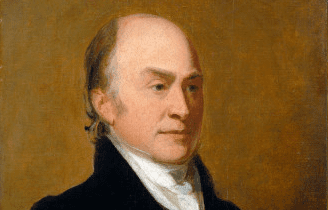

John Quincy Adams and the Expansion of American Democracy

mashupch.com – John Quincy Adams, the sixth president of the United States, was a statesman whose political career spanned multiple decades and included a pivotal role in the expansion of American democracy. While his presidency (1825–1829) was marked by controversy and political strife, his ideas, actions, and legislative efforts laid the groundwork for a broader, more inclusive democracy. Adams’s impact on American democracy is most clearly seen in his role in the development of education, the extension of voting rights, the preservation of the Union, and his progressive views on civil liberties. Throughout his life, Adams remained committed to the ideal of a government that reflects the will and interests of the people—a vision that would continue to shape the nation long after his presidency.

This article explores the ways in which John Quincy Adams contributed to the expansion of American democracy, examining his political philosophy, the reforms he championed, and his vision for a democratic republic that embraced both individual rights and national unity.

Early Influences and Political Philosophy

A Legacy of Public Service

John Quincy Adams was born into a family of exceptional public servants. His father, John Adams, was the second president of the United States, and his mother, Abigail Adams, was an influential advocate for women’s rights and education. Growing up in such an environment, Adams was steeped in the ideals of liberty, equality, and the public good. From a young age, he understood that democracy required constant vigilance and participation. These formative experiences shaped his commitment to public service and his belief that government should serve the common people rather than elite interests.

Adams’s early exposure to European politics, particularly during his diplomatic career, further expanded his understanding of governance. He witnessed firsthand the challenges faced by European monarchies and aristocracies and developed a deep commitment to the democratic ideals that were at the heart of the American experiment. These experiences reinforced his belief that democracy should be grounded in reason, education, and moral responsibility, not in the whims of a monarch or a privileged few.

A Vision for Democratic Progress

John Quincy Adams had a broad, long-term vision for the United States. While many of his contemporaries focused on the immediate challenges facing the nation, Adams was concerned with how the nation could expand and evolve its democratic principles in the future. He was an advocate for an active government that worked to improve the lives of its citizens through education, infrastructure, and social progress.

At the heart of Adams’s political philosophy was the idea that American democracy could be perfected through education, public engagement, and the inclusion of all citizens in the political process. Adams believed that democratic participation was essential to the country’s survival and success, and he spent much of his life championing policies that would increase opportunities for the American people.

Adams’s Role in Expanding Education and Knowledge

The Advocate for National Education

One of John Quincy Adams’s most significant contributions to the expansion of American democracy was his advocacy for a national system of public education. He believed that a well-educated citizenry was the cornerstone of a thriving democracy. During his presidency, Adams proposed the establishment of a national university to train future leaders and citizens, arguing that education was the key to cultivating an enlightened electorate.

Although Congress did not approve his proposal for a national university, Adams’s vision for education did not wane. He continued to advocate for the creation of public schools and for the federal government’s involvement in supporting education throughout his life. His advocacy for education can be seen as a recognition that an informed and educated electorate would be more capable of making wise decisions, which would, in turn, strengthen the democratic process.

Promoting Science, Culture, and Knowledge

In addition to his focus on basic education, Adams also recognized the importance of scientific advancement and cultural enrichment in the development of a democratic society. As president, Adams supported the establishment of scientific institutions and promoted federal funding for research in areas such as agriculture, science, and technology. His push for federal funding of infrastructure projects, including the construction of roads, canals, and bridges, was also part of his larger vision to create a society where information, ideas, and commerce could flow freely, benefiting all Americans.

Adams’s commitment to education and intellectual development extended into his post-presidential years. As a member of the House of Representatives, he continued to speak out in favor of federal funding for education and scientific endeavors, understanding that a strong democracy required citizens who were knowledgeable, critical, and informed.

Expanding Voting Rights and Political Participation

The Challenge of Universal Suffrage

During the early 19th century, voting rights were limited to white male landowners. The United States, while founded on the principles of equality and liberty, had not yet extended the right to vote to all white men, let alone women or African Americans. John Quincy Adams was a vocal advocate for the expansion of voting rights, believing that true democracy required political participation from all citizens, not just the wealthy elite.

While Adams’s views on universal suffrage were progressive for his time, they were also complicated by his own views on race and slavery. Adams opposed slavery vehemently, but his stance on suffrage for African Americans was more reserved. Nonetheless, he believed that as democracy expanded, so too should the right to vote, and he took steps to promote the political rights of free African Americans and women.

Expanding Political Participation for All Citizens

Adams’s presidency was marked by a significant shift in the way political campaigns were conducted. The period of his presidency saw the rise of Jacksonian democracy, a populist movement led by Andrew Jackson that sought to broaden political participation by extending suffrage to all white men, regardless of land ownership. Although Adams was not a part of this populist movement, he saw the power of mass political participation and was largely supportive of efforts to increase voting rights for white men. He believed that the expansion of suffrage to all white men, regardless of property, was a step toward the fulfillment of the American democratic experiment.

In the years following his presidency, as a member of Congress, Adams continued to champion greater political participation, though he was cautious about extending the vote to African Americans or women. His political philosophy evolved over time, reflecting the complexities of the democratic process.

Defending the Union and Fighting for Civil Rights

The Fight Against Slavery

One of John Quincy Adams’s most important contributions to American democracy was his tireless opposition to slavery. Although slavery was not abolished during his presidency, Adams became one of the most vocal and determined advocates for its abolition in the years following his time in office.

As a member of the House of Representatives after his presidency, Adams fought against the expansion of slavery into new territories and states, and he introduced numerous petitions for the abolition of slavery. His efforts in this regard helped to lay the foundation for the later abolitionist movement, which ultimately led to the end of slavery in the United States with the ratification of the 13th Amendment in 1865.

Adams’s stand against slavery was not without political cost. His outspoken opposition alienated many of his Southern colleagues and made him a target of criticism. Nevertheless, he remained resolute in his belief that slavery was incompatible with American democratic ideals and that it was the duty of the government to ensure the protection of human rights for all citizens, regardless of race.

Fighting for Free Speech and Political Rights

In addition to his anti-slavery efforts, John Quincy Adams was also a staunch defender of free speech and civil liberties. As a congressman, he consistently advocated for the rights of citizens to petition the government and to express their political opinions without fear of repression. He was a vocal opponent of the “gag rule”, which was a series of congressional rules that prevented the discussion of slavery petitions. Adams fought tirelessly to repeal these rules, arguing that freedom of speech was fundamental to the American democratic system.

Adams’s defense of civil liberties extended beyond slavery and into broader issues of political rights. He believed that a true democracy required that all citizens have the freedom to express their views and participate fully in the political process.

Conclusion: John Quincy Adams and the Evolution of American Democracy

John Quincy Adams’s legacy in the expansion of American democracy is profound and multifaceted. His efforts to promote education, extend suffrage, defend civil liberties, and advocate for the abolition of slavery reflect his belief in the transformative power of democracy. Although his presidency was marred by controversy and political struggle, his vision for a more inclusive, educated, and just society endured long after he left office.

As a statesman, diplomat, and legislator, Adams contributed to the deepening of American democratic values. His influence on the political landscape helped lay the foundations for the future development of the United States as a more democratic and inclusive nation. In the end, John Quincy Adams’s commitment to the expansion of American democracy serves as a reminder of the importance of public service, education, and a government that is responsive to the needs and rights of its people.

Evils of the Night: A Bizarre Cult Classic

mashupch.com – Evils of the Night is a 1985 American science fiction horror film directed by Mardi Rustam. This low-budget, campy horror film has garnered a cult following over the years, known for its bizarre plot, over-the-top performances, and gratuitous nudity. 

A Plot as Strange as Its Title

The film follows a group of teenagers who vacation at a remote cabin. However, their idyllic getaway takes a sinister turn when they become the targets of a group of alien vampires. These extraterrestrial beings, disguised as elderly humans, need human blood to survive.   

As the teenagers are abducted one by one, a horrifying sequence of events unfolds. The aliens, played by a cast of seasoned actors including John Carradine, Tina Louise, and Julie Newmar, engage in bizarre rituals and indulge in grotesque acts of vampirism.   

A Cult Following and Campy Charm

Evils of the Night is a prime example of 1980s cult cinema. Its low-budget production values, combined with its over-the-top performances and outrageous plot, have earned it a dedicated fanbase. The film’s campy atmosphere and absurd dialogue have made it a beloved cult classic.

Despite its flaws, the film’s unique blend of horror, science fiction, and sexual exploitation has captivated audiences. Its enduring popularity can be attributed to its willingness to embrace the absurd and its ability to entertain with its sheer audacity.

A B-Movie Gem

Evils of the Night may not be a masterpiece of cinema, but it is a fun and entertaining B-movie that delivers on its promise of bizarre and outrageous horror. Its cult following continues to grow, ensuring its place in the pantheon of cult classics.