
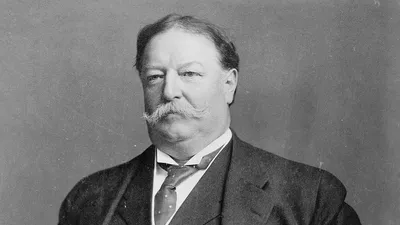
The Legacy of William Howard Taft: President and Jurist

mashupch.com – William Howard Taft, the 27th President of the United States, is a historical figure whose legacy extends far beyond his single term in office. Known for his distinct path through American politics and law, Taft’s legacy is most notable for his dual roles as both a reform-minded president and as the only person to ever serve as both the President and the Chief Justice of the United States Supreme Court. His contributions to American governance, law, and public service remain relevant today, as his policies and judicial leadership continue to shape the political and legal landscape of the United States.

In this article, we will explore the multifaceted legacy of William Howard Taft, focusing on his tenure as president, his time as chief justice, and the lasting impact of his actions in both the political and legal spheres.

Early Life and Political Beginnings

A Family Legacy in Public Service

William Howard Taft was born on September 15, 1857, in Cincinnati, Ohio, into a family with a longstanding tradition of public service. His father, Alphonso Taft, was a prominent lawyer, politician, and diplomat who served as both the U.S. Attorney General and Secretary of War under President Ulysses S. Grant. The influence of his father instilled in William a sense of duty toward serving his country, which would become the driving force behind his own political career.

Taft’s early education at Yale University and later at the University of Cincinnati College of Law solidified his commitment to the legal field. His legal expertise would prove invaluable throughout his career, both as president and, later, as Chief Justice of the United States. His career trajectory quickly expanded into a series of high-profile positions, from serving as a judge on the Superior Court of Ohio to becoming the Governor-General of the Philippines under President Theodore Roosevelt. These roles provided Taft with a diverse set of experiences that would inform his leadership style and decision-making.

Presidency: 1909–1913

An Introduction to the Oval Office

William Howard Taft assumed the presidency in 1909, succeeding his friend and mentor, Theodore Roosevelt. As a trusted ally of Roosevelt, Taft was seen as a continuation of the progressive agenda Roosevelt had championed. However, Taft’s presidency soon diverged from Roosevelt’s, both in terms of his policies and his approach to leadership.

Taft’s administration was marked by his focus on maintaining the stability of the economy while also implementing progressive reforms. One of the cornerstones of his presidency was his commitment to regulating large corporations and monopolies. He continued Roosevelt’s work in trust-busting, filing more antitrust lawsuits than any previous administration, targeting major corporations like Standard Oil and American Tobacco. His efforts helped break up monopolies and ensure greater competition in key industries, contributing to a fairer market for consumers.

Tariff Reform and Its Consequences

Despite his successes, Taft’s presidency faced significant challenges, particularly regarding tariff reform. The Payne-Aldrich Tariff, passed in 1909, was a particularly contentious issue. While Taft had initially campaigned on a promise to reduce tariffs, the tariff reform law ended up raising tariffs on many goods, which angered the progressive wing of his party and strained his relationship with Roosevelt.

The divide between Taft and Roosevelt deepened over time, leading to a rift in the Republican Party. Roosevelt, who had handpicked Taft as his successor, became disillusioned with Taft’s handling of the presidency and launched a third-party bid for the presidency in 1912 under the banner of the Progressive Party. The split between the two led to the election of Democrat Woodrow Wilson in the 1912 election. Despite this setback, Taft’s presidency still had lasting impacts on the country’s legal and economic systems.

Transition to Chief Justice

A New Chapter: From President to Chief Justice

Though his presidency was short-lived, William Howard Taft’s public service career was far from over. In 1921, after his defeat in the 1912 presidential election, Taft received an unexpected offer: President Warren G. Harding nominated him to serve as Chief Justice of the United States Supreme Court. Taft, whose love of the law had always been a central part of his identity, eagerly accepted the nomination. His appointment to the Supreme Court marked a historic moment in American history, as Taft became the only person to serve as both President and Chief Justice of the United States.

Judicial Leadership: Reforming the Court System

As Chief Justice, Taft immediately set to work modernizing and expanding the judicial branch. He focused on improving the efficiency of the court system, which had become burdened by a growing caseload. Under his leadership, the Supreme Court implemented reforms that streamlined its operations, such as creating a more standardized procedure for handling cases and improving the administration of the federal court system.

Taft was also a strong advocate for the construction of a new Supreme Court building. Prior to this, the Court had operated out of temporary facilities. In 1935, after Taft’s tenure, the iconic Supreme Court building was completed—an enduring symbol of Taft’s commitment to strengthening the judiciary.

Key Legal Contributions and Influence

During his time as Chief Justice, Taft oversaw several important Supreme Court cases and was a staunch defender of judicial independence. He also worked to ensure that the judiciary remained a separate and equal branch of government, capable of checking the actions of the executive and legislative branches. His legal opinions were often rooted in a conservative interpretation of the Constitution, focusing on federalism, the separation of powers, and the protection of individual rights.

One of Taft’s most significant contributions to American jurisprudence was his commitment to maintaining the independence and integrity of the judiciary. He strongly believed in the importance of judicial review, the principle that courts could review the constitutionality of laws passed by Congress and signed by the president. His leadership helped cement the Supreme Court’s role as an essential check on the powers of the other branches of government.

Taft’s Lasting Legacy

Legal Reforms and the Expansion of the Federal Judiciary

William Howard Taft’s greatest legacy lies in his contributions to the American legal system, both as president and as Chief Justice. As President, his efforts in antitrust enforcement, the expansion of the Bureau of Mines, and his regulatory policies laid the groundwork for modern progressive reforms in labor, business, and environmental protections.

However, it was his time as Chief Justice that defined his lasting impact on the judiciary. Taft’s advocacy for judicial reform led to the establishment of a more efficient and organized court system. His expansion of the federal judiciary helped reduce the backlog of cases, ensuring a more responsive and effective legal system. Moreover, his leadership in the construction of the Supreme Court building remains one of his most visible legacies.

A Champion of Judicial Independence

Taft’s tenure as Chief Justice helped solidify the role of the judiciary as a separate and equal branch of government. His tireless work to preserve the independence of the judiciary and maintain its integrity ensured that the courts would continue to play an essential role in upholding the Constitution and protecting the rights of citizens. His judicial philosophy influenced the direction of the Court for decades after his departure, with his vision for a stronger, more independent judiciary becoming a core tenet of American legal thought.

A Complex Legacy

While Taft’s legacy is overwhelmingly positive, it is not without its complexities. His presidency was marred by internal divisions within his party, and his policies on tariffs, taxes, and some progressive reforms alienated key figures such as Theodore Roosevelt. However, even his critics acknowledge that his contributions to the legal and political systems were significant, and his ability to bridge the divide between the executive and judicial branches remains an enduring achievement.

Conclusion

William Howard Taft’s legacy as both President and Chief Justice is a testament to his dedication to public service, his deep understanding of American law, and his commitment to strengthening the institutions of government. As the only person to have served in both of these important roles, Taft’s life and career offer a unique perspective on the intersection of law and politics in the United States. From his progressive reforms as president to his transformative work as Chief Justice, Taft’s contributions continue to shape the American political and legal landscape today.

His story is a reminder of the enduring power of public service and the lasting impact one individual can have on the institutions that define a nation. Taft’s dual legacy as both a president and a jurist ensures that his name remains a key part of the fabric of American history for generations to come.
William McKinley: The Forgotten President – Early Life

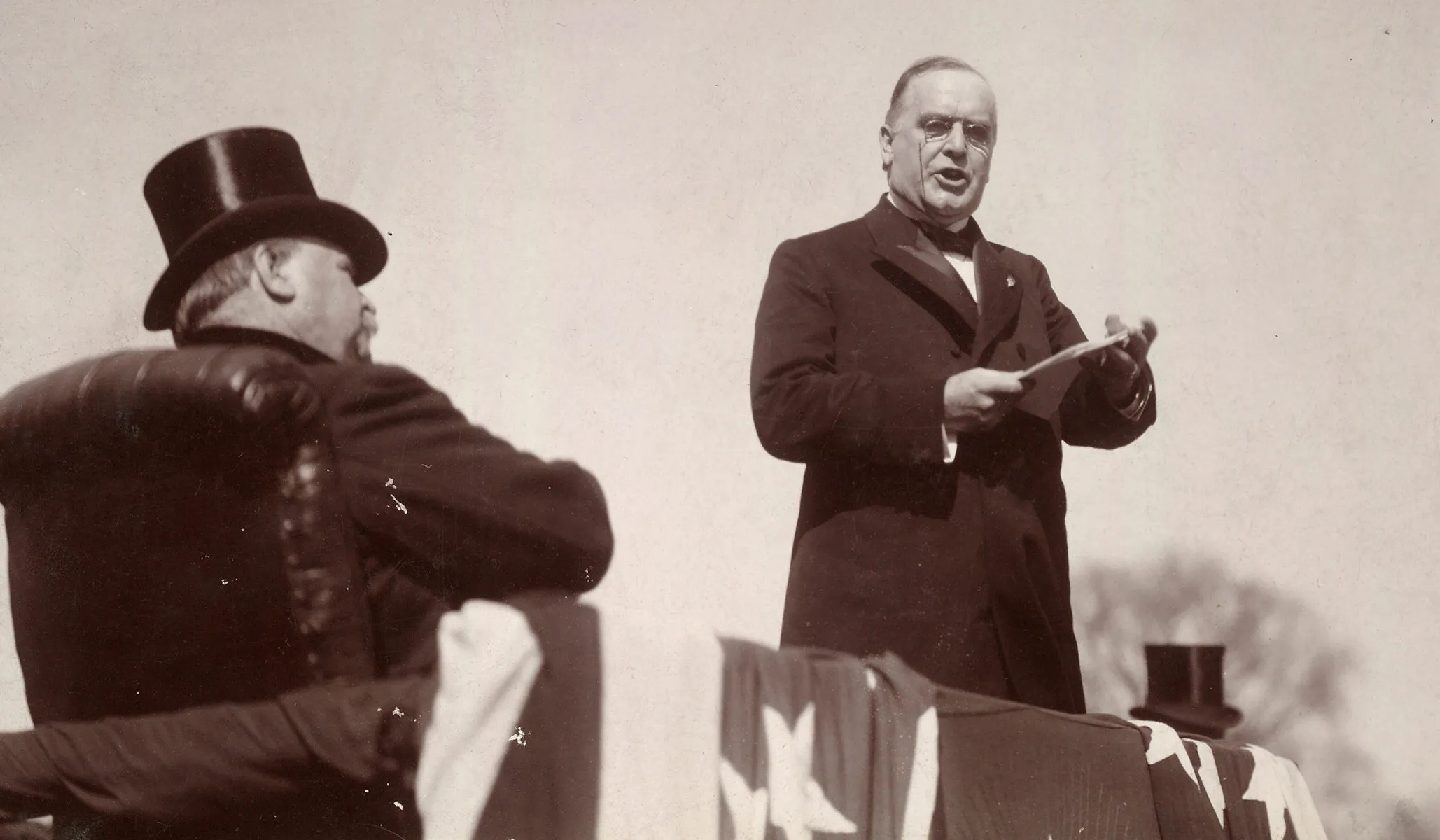
mashupch.com – William McKinley, the 25th President of the United States, is often overlooked in the pantheon of American leaders. While presidents like Abraham Lincoln, Theodore Roosevelt, and Franklin D. Roosevelt dominate discussions in American history, McKinley’s tenure is frequently relegated to the background. However, his presidency—though sometimes overshadowed by the larger-than-life figures that followed and preceded him—played a crucial role in shaping the United States during a time of significant transformation. This article seeks to bring McKinley’s presidency into sharper focus, exploring the circumstances that defined his leadership, the policies he championed, and the legacy he left behind.

Early Life and Political Beginnings

A Modest Start

Born on January 29, 1843, in Niles, Ohio, William McKinley grew up in a working-class family with strong Methodist beliefs. His father, William McKinley Sr., was a businessman, and his mother, Nancy Allison McKinley, was a devout homemaker. McKinley had a modest, yet supportive, upbringing that instilled in him a deep sense of duty, discipline, and patriotism. His education began at public schools, and later, he attended Allegheny College in Meadville, Pennsylvania. However, his college years were interrupted by illness, and he ultimately did not graduate.

Civil War Service

McKinley’s sense of duty led him to join the Union Army during the American Civil War. At the age of 18, he enlisted as a private in the 23rd Ohio Volunteer Infantry. Throughout the war, McKinley proved his mettle, quickly rising through the ranks to the position of major, a testament to his leadership and bravery. He participated in numerous significant battles, including the Battle of Antietam, where he showed remarkable courage and leadership under fire. His wartime service would influence much of his political career, as McKinley often invoked his military experiences to connect with voters, especially during times of national crisis.

Political Rise

After the war, McKinley returned to Ohio and pursued a career in law, while also entering politics. His initial political foray came when he was elected to the U.S. House of Representatives in 1876. Over the next decade, McKinley established himself as a staunch advocate for protective tariffs, which aimed to shield American manufacturers from foreign competition. His position on tariffs earned him the reputation of a defender of American industry, a key part of his political identity. In 1892, McKinley was elected governor of Ohio, where he focused on economic recovery, fiscal discipline, and supporting industrial development. His successes at the state level set the stage for his bid for the presidency in 1896.

The Election of 1896: McKinley’s Path to the White House

The Political Landscape

The 1896 presidential election was a pivotal moment in American history. The nation was in the midst of a severe economic depression, the worst since the Civil War, and issues such as the gold standard and the silver question dominated political discourse. On one side stood William Jennings Bryan, a charismatic and populist figure who advocated for the free coinage of silver, which he believed would help farmers and working-class Americans. On the other was William McKinley, who supported the gold standard and a pro-business platform. McKinley’s focus on restoring economic stability and promoting industrial growth made him the candidate of the Republican Party.

The Campaign

McKinley’s 1896 campaign was notably different from those of his predecessors. Rather than embarking on an exhausting whistle-stop tour, McKinley conducted what became known as a “front porch” campaign. From his home in Canton, Ohio, he gave speeches and hosted rallies, appealing directly to voters. His campaign was well-organized, largely funded by business interests, and aimed at presenting McKinley as the candidate who could bring stability to a nation plagued by economic uncertainty. Bryan, in contrast, crisscrossed the country, delivering impassioned speeches in support of silver and populist reforms. Ultimately, McKinley won the election with 271 electoral votes to Bryan’s 176, marking the beginning of a transformative era in U.S. politics.

McKinley’s Presidency: A Critical Period in American History

The Dingley Tariff and Economic Stabilization

McKinley’s presidency began at a time when the nation was reeling from the effects of the 1893 depression. The economy was fragile, and industrialists, farmers, and workers were facing significant challenges. McKinley’s response to the economic crisis was the Dingley Tariff of 1897, which raised tariffs on imported goods to protect American businesses. The tariff was a direct response to growing foreign competition and the economic discontent that had swept the nation. Though it was controversial, the tariff helped stabilize the U.S. economy and encouraged industrial growth, particularly in the Northeast.

McKinley’s support for the gold standard was another key element of his economic policy. At the time, there was fierce debate over whether the U.S. should continue to adhere to the gold standard or adopt a bimetallic system that included silver. McKinley firmly believed that the gold standard provided long-term fiscal stability and would restore confidence in the U.S. economy. His stance on this issue helped secure his place as a pro-business president, though it also alienated many farmers and rural voters who supported Bryan’s silver-backed policies.

The Spanish-American War and the Rise of American Imperialism

Arguably, McKinley’s most significant and lasting achievement was his handling of the Spanish-American War in 1898. The war, which lasted only a few months, marked the United States’ emergence as a global power. Tensions between the U.S. and Spain had been escalating over the situation in Cuba, where a struggle for independence from Spanish colonial rule was underway. McKinley initially sought a diplomatic solution, but following the mysterious explosion of the USS Maine in Havana Harbor, public pressure for war grew.

Under McKinley’s leadership, the U.S. declared war on Spain, and the conflict resulted in a decisive victory. Spain ceded control of Cuba, Puerto Rico, Guam, and the Philippines to the United States. This expansion of U.S. territories marked the beginning of American imperialism and solidified McKinley’s place in history as the president who helped transform the U.S. into an imperial power. However, McKinley’s decision to annex the Philippines was controversial, leading to the Philippine-American War (1899-1902), in which U.S. forces fought against Filipino insurgents seeking independence.

The Open Door Policy and Expansion into Asia

McKinley also pursued an ambitious foreign policy agenda in Asia. In 1899, Secretary of State John Hay, under McKinley’s direction, formulated the Open Door Policy, which sought to ensure equal trading rights for all foreign nations in China and prevent any single power from dominating the region. While the policy was not entirely successful in achieving its goals, it reflected McKinley’s vision of expanding American influence and promoting free trade across the globe.

McKinley’s Assassination and Legacy

A Tragic End

McKinley’s second term was tragically cut short when he was assassinated in September 1901. On September 6, 1901, while attending the Pan-American Exposition in Buffalo, New York, McKinley was shot twice by anarchist Leon Czolgosz. McKinley succumbed to his wounds on September 14, 1901, leaving Vice President Theodore Roosevelt to assume the presidency. McKinley’s assassination shocked the nation and marked a moment of profound change in the American political landscape.

The Forgotten Legacy

Despite his pivotal role in shaping the U.S. during a time of profound change, McKinley is often referred to as a “forgotten president.” His tenure was overshadowed by the more dynamic presidencies of Theodore Roosevelt and Franklin D. Roosevelt. McKinley is often seen as a transitional figure, one who bridged the gap between the more conservative, business-oriented policies of the late 19th century and the progressive reforms of the 20th century.

Nevertheless, McKinley’s presidency had a lasting impact on the direction of American foreign and domestic policy. His leadership during the Spanish-American War and his embrace of imperialism set the stage for the U.S. to become a global power in the 20th century. His support for the gold standard and protective tariffs laid the foundation for the economic prosperity of the early 20th century, and his policies helped establish the United States as a dominant force on the world stage.

Conclusion: Rediscovering McKinley’s Place in History

William McKinley may not be as well-remembered as some of his successors, but his presidency played a critical role in shaping the modern United States. He guided the nation through an economic crisis, oversaw the expansion of American territories, and laid the groundwork for future foreign policies. While his legacy has been overshadowed by more charismatic figures, McKinley’s contributions to American history deserve recognition. As the 25th president, McKinley navigated a rapidly changing world with pragmatism and vision, and his leadership continues to be an important part of the nation’s story.

Joe Biden: Nobel Peace Prize Nominee (as Vice President)

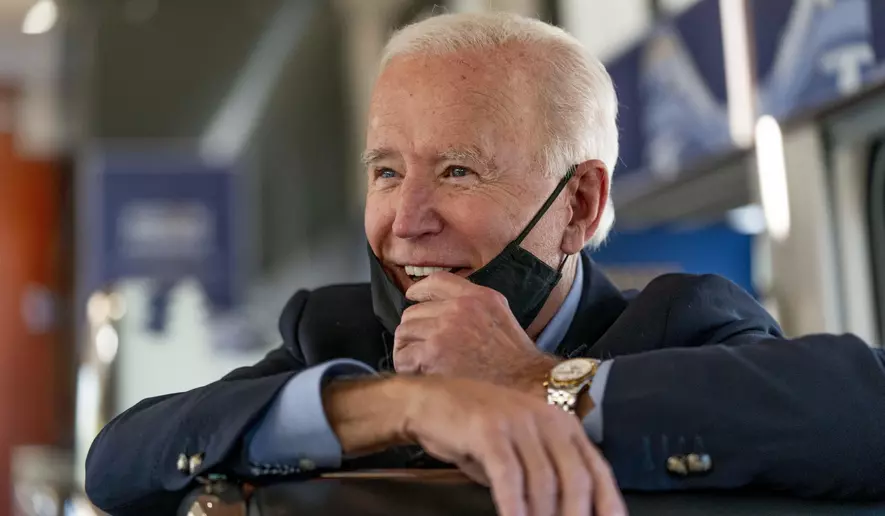
mashupch.com – Joe Biden, the 46th President of the United States, has had a distinguished political career that has spanned over five decades. His tenure as Vice President under Barack Obama from 2009 to 2017 was marked by numerous key policy achievements, including the expansion of healthcare, the withdrawal of U.S. troops from Iraq, and the handling of the aftermath of the 2008 global financial crisis. However, one of the most unique moments of his vice presidency came in 2017 when he was nominated for the Nobel Peace Prize—a nomination that sparked discussions around his contributions to global diplomacy and peace-building efforts during his time in office.

Biden’s nomination for the Nobel Peace Prize was notable not only for his role as a U.S. leader but also for the broader context in which it occurred. During his vice presidency, Biden was often seen as a key figure in navigating complex international challenges and advancing policies that promoted peace, stability, and cooperation across the globe. In this article, we explore the significance of Joe Biden’s nomination for the Nobel Peace Prize, his contributions to global diplomacy, and the factors that made him a worthy candidate for the prestigious honor.

The Nobel Peace Prize and Its Significance

The Nobel Peace Prize, one of the five original awards established by the will of Swedish inventor Alfred Nobel, is one of the most prestigious international accolades. Awarded annually, the prize honors individuals or organizations that have made significant contributions to the promotion of peace, diplomacy, and the resolution of conflicts.

The Nobel Peace Prize is awarded by the Norwegian Nobel Committee, and the selection process is rigorous, with candidates being nominated by a select group of individuals, including members of national governments, university professors, and previous laureates. As a result, being nominated for the Nobel Peace Prize is a significant honor in and of itself, even if the individual or organization does not ultimately win.

Biden’s nomination in 2017 was part of a long-standing tradition of recognizing political leaders who have contributed to global peace, such as former U.S. Presidents Jimmy Carter and Barack Obama, both of whom were awarded the Nobel Peace Prize for their efforts to resolve conflicts and promote human rights. However, Biden’s nomination stood out because of his role in key international agreements, diplomatic efforts, and peacebuilding initiatives during his time as Vice President.

Biden’s Role as a Diplomat and Global Leader

Joe Biden’s nomination for the Nobel Peace Prize was largely due to his extensive work in diplomacy and global peace initiatives during his time as Vice President. Biden was an active participant in shaping U.S. foreign policy, particularly in conflict areas such as the Middle East, Europe, and Eastern Asia. He was known for his diplomatic efforts to foster alliances, de-escalate conflicts, and promote democratic values and human rights around the world.

1. The Iran Nuclear Deal

One of the most significant international agreements of the Obama administration was the Joint Comprehensive Plan of Action (JCPOA), commonly known as the Iran Nuclear Deal. Biden played a key role in the negotiations that led to this landmark agreement, which aimed to curb Iran’s nuclear ambitions in exchange for sanctions relief. The deal, signed in 2015, was hailed as a diplomatic victory, as it helped prevent the escalation of tensions between the U.S. and Iran and reduced the risk of nuclear proliferation in the Middle East.

The Iran Nuclear Deal was a prime example of Biden’s commitment to diplomacy as a means of resolving international conflicts. His involvement in the deal showcased his belief in the power of negotiations and international cooperation over military confrontation. While the deal was later criticized and eventually abandoned by the Trump administration, Biden’s role in facilitating the agreement reinforced his stature as a leading advocate for peace and diplomatic engagement.

2. Support for NATO and Transatlantic Alliances

During his vice presidency, Biden also focused on strengthening America’s relationships with its European allies, particularly through NATO (North Atlantic Treaty Organization). Biden was a staunch advocate for maintaining the strength of the NATO alliance and worked to ensure that the United States would remain committed to collective defense. His efforts to reinforce transatlantic partnerships and support democratic values were central to U.S. foreign policy during his time in office.

Biden’s work with NATO also included efforts to respond to challenges posed by Russia, particularly in the aftermath of Russia’s annexation of Crimea in 2014. Biden helped coordinate sanctions against Russia and emphasized the importance of a unified Western response. His strong support for NATO and its role in maintaining global peace and security made him a key figure in U.S. foreign policy during this period.

3. Advancing Human Rights and Democracy

Throughout his career, Biden has been a strong advocate for human rights and democratic values on the global stage. As Vice President, he took a leading role in promoting democracy and human rights in countries that were undergoing transitions, such as Ukraine, Tunisia, and Myanmar. Biden’s commitment to supporting democratic institutions and empowering civil society was evident in his diplomatic engagements and his efforts to counter authoritarianism.

One of the most notable instances of Biden advocating for human rights was his involvement in supporting Ukraine during the 2014 Ukrainian revolution. Biden worked closely with President Petro Poroshenko and other Ukrainian leaders to promote reforms, anti-corruption measures, and democratic governance in the face of Russian aggression. His support for Ukraine’s sovereignty and its aspirations for greater integration with the West contributed to stabilizing the region and defending democratic values in Europe.

4. Advocating for Global Health and Security

Biden’s work in global health and security also contributed to his nomination for the Nobel Peace Prize. He was a vocal advocate for expanding global health initiatives and addressing challenges such as the HIV/AIDS epidemic, malaria, and Ebola outbreaks. His leadership in coordinating U.S. efforts to respond to the Ebola outbreak in West Africa, for instance, demonstrated his commitment to international cooperation in combating health crises.

Biden’s work in global health also aligned with his support for the Global Health Security Agenda (GHSA), an initiative to strengthen health systems and prepare for future pandemics. His involvement in these global health efforts helped demonstrate his belief in the importance of international collaboration to address global challenges.

Biden’s Leadership and Legacy in Global Peace

Joe Biden’s nomination for the Nobel Peace Prize in 2017 reflected his leadership in the global arena and his efforts to build peace through diplomacy, human rights, and international cooperation. Biden’s nomination came at a time when his diplomatic expertise and long-standing commitment to peace were widely recognized. Whether in his work on the Iran Nuclear Deal, his advocacy for human rights, or his support for U.S. allies and global security, Biden’s contributions to peace and diplomacy were significant.

While Biden did not ultimately win the Nobel Peace Prize in 2017, his nomination was a recognition of his efforts to resolve conflicts through dialogue and his belief in the power of diplomacy to achieve lasting peace. Biden’s legacy as a global leader, particularly in the areas of arms control, democratic governance, and human rights, underscores his significant role in shaping U.S. foreign policy and his lasting impact on global peace and security.

As President of the United States, Biden continues to prioritize international diplomacy and peacebuilding. His ongoing commitment to multilateralism, climate action, and advancing human rights further solidifies his role as a global leader dedicated to promoting peace and security in an increasingly complex and interconnected world.

Conclusion

Joe Biden’s nomination for the Nobel Peace Prize as Vice President was a recognition of his unwavering commitment to global peace, diplomacy, and the promotion of democratic values. His work in brokering significant international agreements, strengthening alliances, advancing human rights, and addressing global health challenges contributed to his stature as a diplomatic leader. While the nomination itself did not culminate in an award, it remains a testament to Biden’s influence and leadership on the world stage during his time as Vice President.

As President, Biden has continued to build on these principles, striving to create a more peaceful and just world through diplomacy, cooperation, and respect for human dignity. His legacy as an advocate for peace, both at home and abroad, will continue to shape U.S. foreign policy for years to come.